
What an OHSU study found three months after one Oregon psilocybin session
A new OHSU-led study of 346 people at Oregon's licensed psilocybin centers found substantial drops in depression, anxiety, and PTSD three months after…
GEM Blog
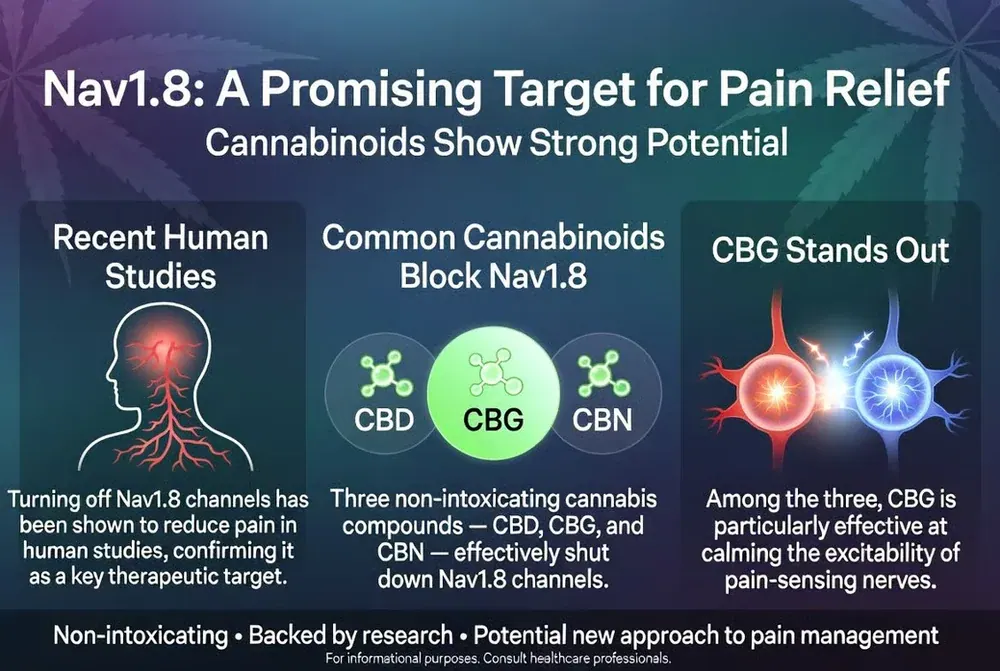
Image: Marc Landers (@marclanders) on X
Pain is one of the most common reasons people ask about medical cannabis. A study from Yale researchers, shared this week by medical-cannabis educator Marc Landers on X, looks at one specific way some cannabinoids might affect pain signaling.
“Nav1.8, an analgesic target for nonpsychotomimetic phytocannabinoids” by Mohammad-Reza Ghovanloo, Sidharth Tyagi, Peng Zhao and Stephen G. Waxman was published in the Proceedings of the National Academy of Sciences (PNAS) in January 2025. The authors are with the Yale School of Medicine, Yale’s Center for Neuroscience and Regeneration Research, and the VA Connecticut Healthcare System.
Nerves send signals using tiny channels that let sodium in and out. Three of these sodium channels (Nav1.7, Nav1.8 and Nav1.9) sit in the peripheral nerves that sense pain. Nav1.8 recovers quickly after firing, so it helps those nerves fire again and again. That makes it an attractive target for new pain treatments. In clinical studies after surgery (abdominoplasty and bunionectomy), a drug that selectively blocks Nav1.8 reduced acute pain, although relief was only partial. Those human results are for that drug, not for cannabinoids.
This was laboratory research on nerve cells, not a study of living animals or people. It did not test doses, products or pain relief in patients. The authors themselves say the findings warrant “further in vivo studies.” Lab concentrations also don’t translate directly into a product, a dose or a route of use.
So the study adds a mechanism to the conversation. It does not prove that CBD, CBG or CBN products relieve pain in people.
Research like this helps explain why scientists keep studying cannabinoids for pain, and why CBG in particular is getting more attention. It is also a reminder that “CBD,” “CBG” and “CBN” are different compounds with different properties, and that early lab findings need careful follow-up.
At Green Earth Medicine, Christian Lé, MD has applied cannabis knowledge for 15 years across thousands of Oregon patient cases. When new research appears, we read it carefully, separate early signals from established practice, and talk with each adult patient about what may or may not apply to their symptoms, medications and goals.
If you’re an Oregon adult living with pain and curious about physician-guided medical cannabis care, you can learn more at greenearthmedicine.com.
Source: Ghovanloo M-R, Tyagi S, Zhao P, Waxman SG. Nav1.8, an analgesic target for nonpsychotomimetic phytocannabinoids. PNAS. 2025;122(4):e2416886122. PubMed · Free full text
Shared on X by Marc Landers.
Image: Marc Landers (@marclanders) on X
This article is for education only and is not medical advice, a diagnosis or a guarantee of benefit. Talk with a qualified clinician about your own care. Green Earth Medicine serves adults in legal medical contexts.
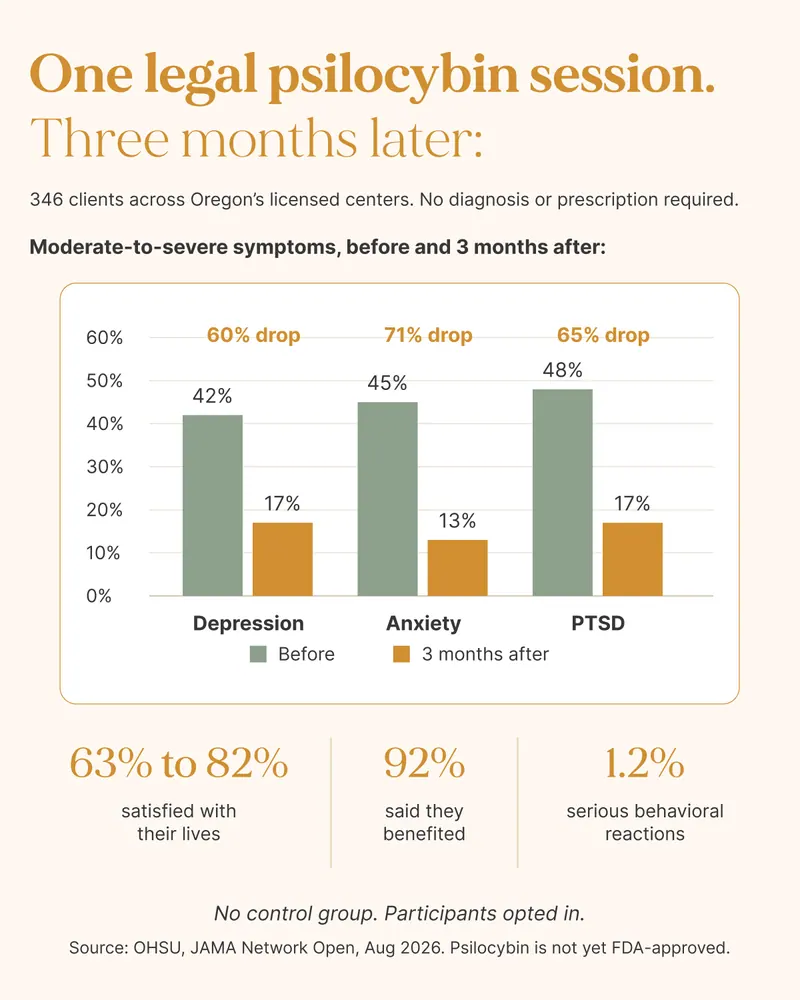
A new OHSU-led study of 346 people at Oregon's licensed psilocybin centers found substantial drops in depression, anxiety, and PTSD three months after…
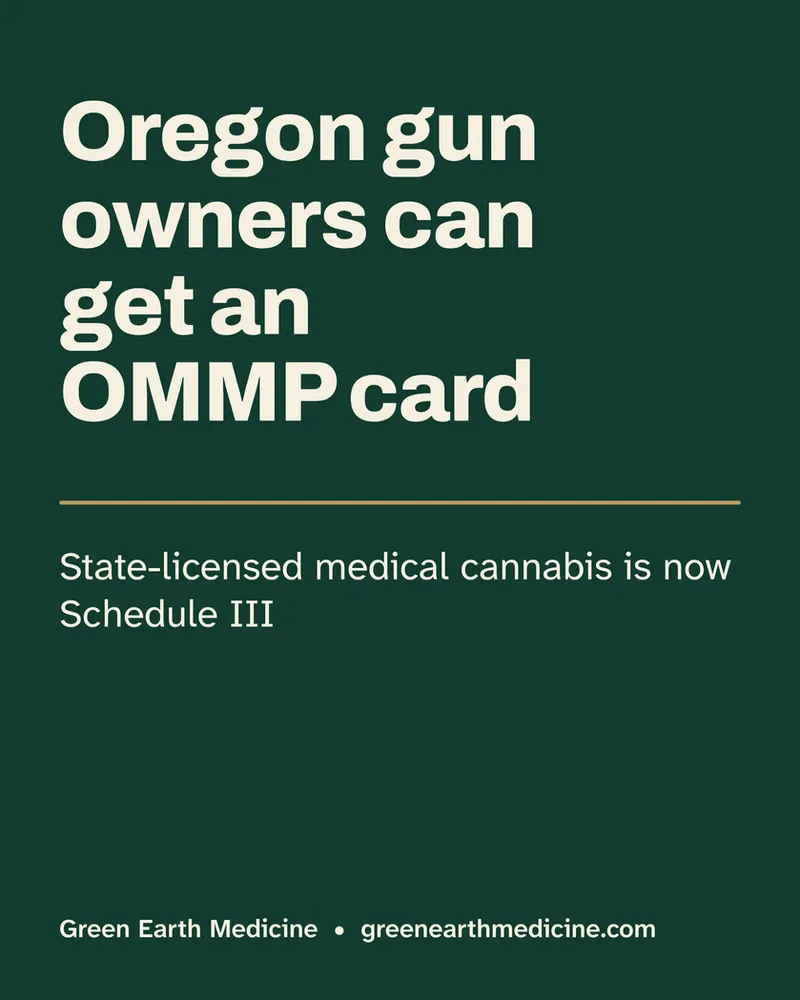
On April 28, 2026, the Justice Department placed state-licensed medical cannabis in Schedule III. Oregon gun owners can get an OMMP card and use that …

A new Aging Cell paper shows LSD pushes brain gene activity in the opposite direction of aging. In rodents, that effect ran stronger than exercise.